The fundamental objectives of European integration were to secure peace, promote economic cooperation, establish a common market, strengthen political coordination, protect democracy and human rights, and foster solidarity among European states. Defence policy, however, remained largely in the shadow of economic integration for decades. The European project initially developed around economic cooperation, gradually creating a common market, a shared currency among many member states, and a deeper framework for political coordination. The establishment of the Schengen Area further strengthened integration, helping the European Union emerge as one of the world’s largest economic blocs. Yet Europe did not achieve the same degree of integration in the field of defence. Under the security umbrella provided by NATO, and particularly by the United States, European states largely relegated the development of autonomous military capabilities to the background.
Russia’s full-scale invasion of Ukraine in 2022 fundamentally altered Europe’s approach to security, as the war challenged not only Ukraine’s future but also the foundations of Europe’s post-Cold War security architecture. Subsequent developments, including growing uncertainty over the long-term extent of the United States’ commitment to European security and renewed debates within NATO over burden-sharing, have pushed European states to rearm on a scale not seen in decades. In response, the European Union has begun pursuing a broader transformation of its defence architecture, seeking to develop a more integrated defence-industrial ecosystem, strengthen common procurement and supply mechanisms, and improve Europe’s overall capacity for strategic deterrence. More importantly, this transformation is increasing the relevance of two major NATO powers outside the European Union: Türkiye and the United Kingdom, both of which are becoming increasingly central to the future of European security.
A Historic Turning Point in European Defense Is Underway
Following the collapse of the Soviet Union in the 1990s, European states significantly reduced their defence expenditure, benefiting from what became widely known as the “peace dividend.” This post-Cold War security model rested on three broad assumptions: that the United States would continue to guarantee Europe’s security, that large-scale conventional warfare would not return to the continent, and that growing economic interdependence would reduce the likelihood of major interstate conflict. Russia’s invasion of Ukraine, however, fundamentally undermined these assumptions and exposed the limitations of Europe’s post-Cold War approach to defence.
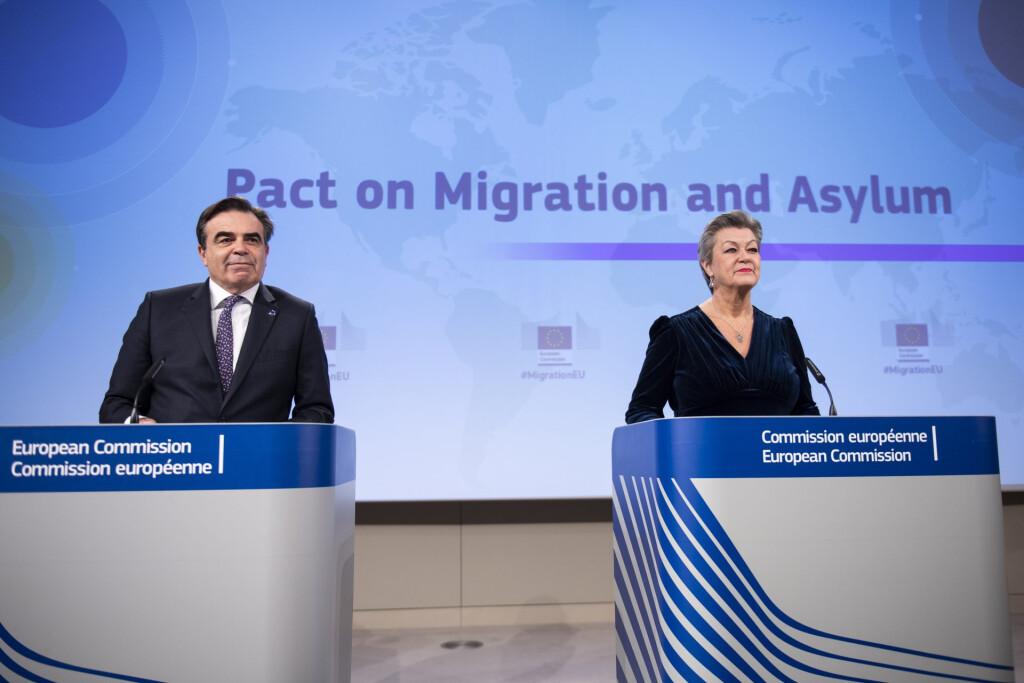
The White Paper for European Defence – Readiness 2030, published in 2025, marked an important shift in the European Commission’s approach to security and defence. The document warned that Europe was facing an “acute and growing threat environment” and emphasised the need to substantially strengthen the continent’s defence readiness by 2030. Rather than advocating the creation of a European army, the strategy focuses on strengthening Europe’s ability to generate, produce and deploy military capabilities more effectively. Its overall approach can be understood through three closely related dimensions: capability readiness, industrial readiness and operational readiness.
Capability readiness focuses on addressing critical military capability gaps through greater coordination and cooperation among member states. Industrial readiness seeks to strengthen Europe’s defence-industrial base by expanding production capacity, encouraging joint procurement and reducing fragmentation across national defence markets. Operational readiness, meanwhile, concerns Europe’s ability to move, deploy and sustain military forces rapidly and effectively across the continent. Taken together, these objectives reflect a broader shift from viewing defence primarily as a national responsibility towards treating military preparedness as an increasingly collective European challenge.
ReArm Europe: Europe’s €800 Billion Defense Plan
The ReArm Europe / Readiness 2030 initiative, announced in March 2025, constitutes the financial backbone of Europe’s emerging rearmament strategy. The plan is designed to mobilise investment capacity that could reach approximately €800 billion, reflecting the scale of the transformation European policymakers believe is necessary to rebuild military readiness and expand defence-industrial capacity.
The initiative relies primarily on two major financial mechanisms.
1. SAFE (Security Action for Europe)
SAFE is a €150 billion financial instrument designed to provide long-term defence-related loans to EU member states. The mechanism aims to support investment in strategically important areas, including air and missile defence, ammunition production, drone and counter-drone technologies, cybersecurity, AI-enabled military systems and military mobility infrastructure.
The significance of SAFE extends beyond the size of the fund itself. By using EU-level financing to support national defence investment, the mechanism represents a broader attempt to encourage coordination among member states and reduce the fragmentation that has traditionally characterised European defence procurement. In this sense, SAFE is not simply a funding mechanism; it is also part of an effort to gradually reshape the structure of the European defence market.
**2. Fiscal Flexibility for Defence Spending **
The second pillar of the strategy involves greater fiscal flexibility for defence expenditure. By temporarily relaxing certain constraints associated with the Stability and Growth Pact, the EU has created additional room for member states to increase military spending without immediately facing the same degree of pressure from existing deficit rules. The European Commission estimates that this mechanism could generate approximately €650 billion in additional fiscal space over four years.
Although this measure may appear technical, its political significance is considerable. For decades, fiscal discipline was one of the central organising principles of European economic governance. The willingness to create greater budgetary flexibility specifically for defence therefore illustrates how dramatically the hierarchy of EU priorities has changed. Military preparedness is increasingly being treated not as a secondary national concern, but as a major European policy objective alongside economic stability and fiscal sustainability.
The White Paper identifies several critical capability gaps, including air defence, artillery systems, ammunition, drone and counter-drone capabilities, military mobility, cyber capabilities and strategic support systems. These shortcomings reveal a broader structural problem. Europe’s challenge is not simply that defence expenditure has been too low, but that decades of fragmented procurement, limited production capacity and insufficient coordination have weakened the continent’s ability to translate economic resources into military output.
This distinction is crucial. Europe may possess the financial capacity to rearm, but money cannot instantly rebuild production lines, expand ammunition factories, train specialised workers or shorten complex procurement cycles. Rearmament therefore depends not only on political willingness to spend, but also on the industrial capacity to absorb that spending effectively.
Why Is Europe Struggling?
Europe’s difficulties are rooted in several structural weaknesses. The existence of 27 national defence procurement systems has contributed to limited standardisation, duplication and fragmentation across the continent. Different states frequently purchase different systems for similar military requirements, preventing European defence industries from fully benefiting from economies of scale.
The problem is particularly visible in ammunition production. European stockpiles have come under significant pressure since the beginning of the war in Ukraine, while existing production capacity has struggled to adjust rapidly to higher levels of demand. At the same time, lengthy procurement procedures mean that major weapons systems can take years to move from political approval to actual delivery.
The European Union therefore seeks not only to increase defence expenditure, but also to improve the efficiency with which that expenditure is converted into military capability. Joint procurement, greater standardisation and industrial coordination are intended to reduce costs, expand production volumes and create more predictable long-term demand for European manufacturers.
Yet even if these reforms succeed, Europe faces an additional problem: rebuilding industrial capacity takes time. This is precisely why partnerships with states outside the European Union are becoming increasingly important. If the EU cannot close its capability gaps rapidly enough through its own industrial base, cooperation with external military and industrial powers may become not merely desirable, but strategically necessary.
Problem of Defining Europe
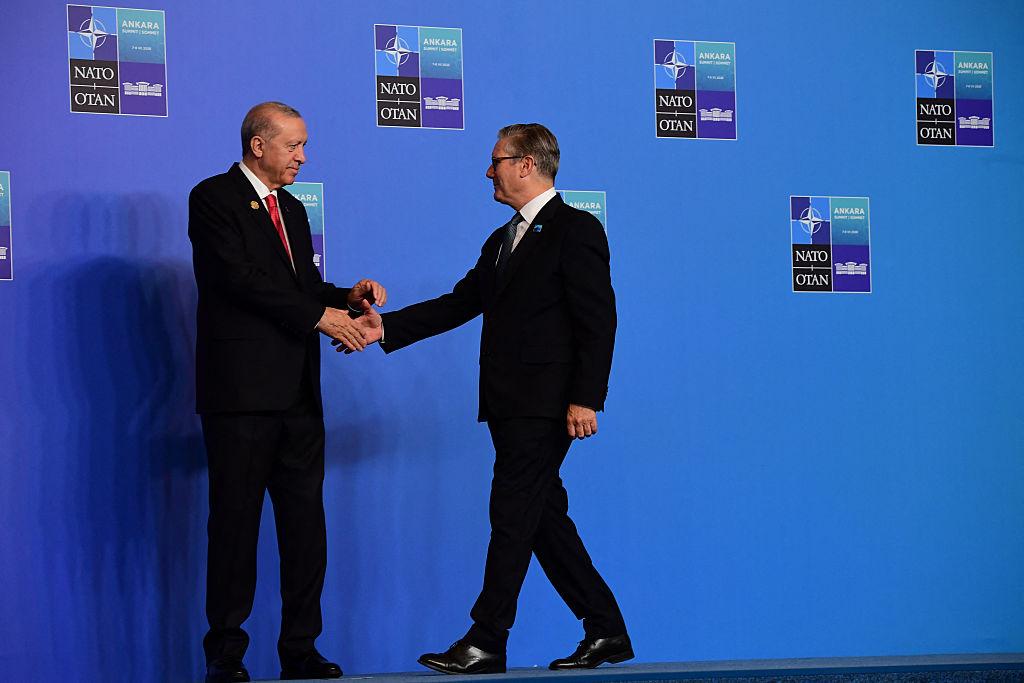
****One of the most consequential questions surrounding Europe’s current military build-up is not simply how much the continent will spend on defence, but how Europe itself will be defined as a strategic space. The European Union increasingly wants higher defence expenditure to strengthen European industry, reduce dependence on external suppliers and create a more autonomous technological and industrial base. Yet this ambition immediately confronts a structural problem: the military geography of Europe does not correspond neatly to the institutional geography of the European Union. Two of the continent’s most consequential military powers, the United Kingdom and Turkey, remain outside the EU while both continue to occupy central positions in NATO and in the wider European security environment.
This creates a contradiction that Brussels will find increasingly difficult to manage. If European defence is defined primarily through EU membership, then some of the military capabilities most relevant to continental security remain partially outside the institutional framework intended to strengthen that security. If, by contrast, European defence is defined in strategic rather than institutional terms, then the EU can no longer claim exclusive political ownership over Europe’s emerging security architecture. The issue is therefore not simply whether Europe can rearm, but who will be allowed to participate in that rearmament and under what political conditions. This question will shape procurement rules, defence-industrial subsidies, technological cooperation, nuclear deterrence, NATO-EU relations and the balance between European strategic autonomy and continued transatlantic dependence.
Britain Left the European Union, Not European Security
The United Kingdom illustrates this tension particularly clearly. Brexit removed Britain from the European Union, but it did not remove Britain from European geopolitics. The distinction became even more visible after Russia’s invasion of Ukraine. Britain remains one of Europe’s most capable military powers, one of its nuclear-armed states and one of NATO’s most important members. More importantly, it possesses a defence-industrial ecosystem that cannot easily be separated from the rest of Europe. British companies remain deeply involved in aerospace, missile systems, submarines, naval platforms, propulsion technologies, radar, electronic warfare and strategic intelligence.
In this sense, Brexit produced a peculiar strategic condition. Britain became institutionally more distant from Brussels while remaining militarily embedded in the security of the continent. The war in Ukraine reinforced this reality. London emerged as one of Kyiv’s most active European supporters and demonstrated that a major continental security crisis could not be managed through EU capabilities alone. This is why the renewed convergence between Britain and continental Europe in defence should not be understood merely as a diplomatic reconciliation after Brexit. It reflects something more structural: strategic necessity is beginning to reverse some of the political distance created by institutional separation.
Britain therefore occupies a paradoxical position in the European security order. It is formally outside the European Union while remaining inside the highest tier of European military power. This makes the United Kingdom a useful example of what may become an increasingly important category in European geopolitics: the strategic insider that is simultaneously an institutional outsider.
The Nuclear Question Makes Britain Even Harder to Exclude
Britain’s nuclear role deserves greater attention than it usually receives in discussions of European defence. For much of the post-war period, European nuclear security ultimately depended on the American guarantee. If confidence in the permanence of that guarantee weakens over time, even without disappearing completely, the political importance of the British and French nuclear arsenals will increase. This would not automatically create a unified European nuclear deterrent, since London and Paris maintain different doctrines, command structures and strategic traditions. Nevertheless, it would make one uncomfortable fact impossible to ignore: any serious attempt to create a more autonomous European deterrence structure would depend partly on a country that is not a member of the European Union.
This creates a deeper contradiction for European strategic autonomy. If the EU seeks a security order less dependent on Washington, it may need to rely more heavily on Britain. Yet Britain itself remains closely integrated into the wider transatlantic strategic system. European autonomy, in other words, may not emerge through complete separation from existing alliances, but through a redistribution of responsibility within them. This is one reason why the future of European deterrence may be more complicated than the simple choice between “American dependence” and “European independence.”
Turkey Matters for Different Reasons
Turkey presents a different but equally important strategic problem. Unlike Britain, Turkey is not a nuclear power and does not possess the same level of global force projection. Yet evaluating Ankara according to those criteria alone obscures the areas in which Turkey may become particularly valuable to European defence. Turkey combines geography, military scale, operational experience, a large standing military and an increasingly diversified defence-industrial base. Its location connects the Black Sea, the Balkans, the Caucasus, the Middle East and the Eastern Mediterranean, placing the country at the intersection of several theatres that directly affect European security.
The Russia-Ukraine war has made this geographical importance much more visible. The Turkish Straits are not simply a national geographical asset but a strategic chokepoint connecting the Black Sea to the Mediterranean. In a prolonged period of confrontation between Russia and the West, Turkey therefore occupies a position that no other European country can easily reproduce. Geography gives Ankara leverage, but geography alone does not explain why Turkey may become more significant to European defence over the next decade. The more important long-term development is the expansion of Turkey’s defence-industrial capacity.
Europe Is Rediscovering the Importance of Mass
Over the past decade, Turkey has developed substantial capabilities in unmanned systems, munitions, armoured vehicles, missiles, electronic warfare, radar and naval platforms. The most important characteristic of this sector, however, may not be technological sophistication alone. It may be the ability to produce at relatively high volumes and at competitive costs.
This matters because the war in Ukraine has exposed the weaknesses of the post-Cold War European defence model. European industries were largely structured around smaller production runs, highly sophisticated and expensive systems and procurement cycles designed for limited military operations rather than prolonged industrial warfare. That model was sustainable in an environment of low-intensity interventions and relative strategic stability. It is much less suited to a conflict in which artillery shells, drones, missiles, vehicles and air-defence interceptors can be consumed at rates far beyond peacetime assumptions.
Modern warfare therefore cannot be understood only through the quality of individual weapons systems. Technological superiority matters, but it becomes strategically limited when production is too slow, stockpiles are too small or replacement costs are unsustainable. A missile that is technically superior but available only in very limited numbers may offer less long-term strategic value than a slightly less advanced system that can be manufactured continuously at scale. European defence planning is consequently being forced to rediscover a concept that had become unfashionable after the Cold War: mass.
The New Measure of Power May Be Replacement Capacity
This shift may significantly increase Turkey’s strategic value. Ankara’s comparative advantage may lie not in replacing France, Germany or Britain in the highest-end technological sectors, but in providing something Europe currently lacks: industrial depth and production elasticity. In practical terms, Turkey could become part of Europe’s wartime surge capacity.
This point deserves greater attention because military power in a prolonged conflict does not depend only on what a state possesses on the first day of war. It also depends on how rapidly destroyed equipment can be replaced, how quickly ammunition stocks can be replenished and whether industry can expand production when demand rises sharply. Replacement rates, production lines, supply chains and skilled industrial labour are therefore becoming strategic variables in their own right.
This may eventually change the way power is measured in Europe. For much of the twentieth century, military hierarchy was associated with army size, nuclear weapons, combat aircraft or other major platforms. The war in Ukraine suggests that twenty-first-century military power may increasingly depend on something less visible: the capacity to replenish. Countries able to manufacture shells, missiles, drones, vehicles and components quickly may acquire strategic importance disproportionate to their diplomatic status or economic size.
Britain and Turkey Are Not Alternative
Britain and Turkey should therefore not be treated as competing alternatives. They potentially compensate for different weaknesses within the European defence system. Britain contributes high-end strategic capabilities, including nuclear deterrence, aerospace technologies, submarines, advanced missiles, intelligence and deep integration with the transatlantic defence ecosystem. Turkey contributes a different combination of military scale, geographic access, scalable manufacturing, unmanned systems, armoured platforms, missiles, munitions, electronic warfare and naval production.
Europe’s problem is not a single capability gap but a layered shortage involving deterrence, production, logistics, manpower, technology and geography. Britain and Turkey matter precisely because they address different parts of that shortage. From this perspective, excluding either country from the emerging European defence architecture would impose costs that are not purely political. It could also slow rearmament, reduce production flexibility and deepen existing capability gaps.
The EU Faces a Conflict Between Strategic Autonomy and Strategic Urgency
This leads directly to the central contradiction in the European Union’s emerging defence policy. The EU’s military agenda is also an industrial agenda. Brussels does not want hundreds of billions of euros in new defence spending simply to increase the revenues of non-European suppliers. If European governments dramatically increase their military budgets while much of that demand flows toward external companies, Europe may become militarily stronger while remaining industrially dependent. That would weaken the logic of strategic autonomy and leave the continent reliant on foreign technology, maintenance networks, spare parts, software and production capacity.
For that reason, the preference for “Buy European” procurement is politically understandable. Yet the opposite strategy also carries serious risks. Europe cannot immediately manufacture everything it needs. Expanding ammunition factories, missile production lines, air-defence systems and other strategic capabilities requires investment, specialised labour, secure supply chains, regulatory adaptation and, above all, time.
Europe therefore faces a conflict between two different clocks. The industrial clock operates in years, while the security clock can operate in months. Strategic autonomy pushes Europe toward long-term domestic capacity building, while strategic urgency pushes it toward acquiring usable capability in the shortest possible time. These two objectives are not necessarily compatible.
Rearmament Is Also a Struggle Over Economic Power
This is where Britain and Turkey become politically uncomfortable for the EU. From a military perspective, greater access to British and Turkish industrial capacity could accelerate European rearmament. From an institutional perspective, however, opening European defence programmes too widely to non-members may undermine the political objective of consolidating production within the Union.
The debate is therefore not simply about protectionism or market efficiency. It is about who will economically and politically benefit from Europe’s rearmament. Defence procurement creates factories, employment, technological ecosystems, export markets and long-term strategic relationships. The countries and companies that manufacture Europe’s weapons today may acquire political leverage over European security for decades.
Defence industrial policy should therefore be understood as a form of geopolitical redistribution. Europe is not merely buying military equipment; it is deciding where future industrial capacity will be located, which states will control strategic technologies and who will hold bargaining power in future crises. The competition over procurement rules is consequently also a competition over the internal hierarchy of Europe.
Turkey’s Main Obstacle Is Political, Not Military
Turkey’s position is particularly sensitive because its principal obstacle is not military capacity but politics. From NATO’s perspective, Turkey is clearly inside the European security system. From the EU’s institutional perspective, it remains outside. These two realities coexist uneasily.
Turkey’s EU accession process has effectively stalled, while disputes over Cyprus, the Eastern Mediterranean, democratic governance and foreign-policy alignment continue to complicate its relationship with Brussels. Greece and the Republic of Cyprus also have strong incentives to resist arrangements that could give Turkey greater influence within European defence mechanisms without resolving existing political disputes.
The deeper issue, therefore, is whether military necessity can produce functional integration without political integration. For decades, discussions about Turkey’s relationship with Europe were dominated by the question of EU membership. The emerging security environment may create a very different model. Turkey could become deeply embedded in European defence production, NATO planning, Black Sea security, infrastructure protection and military supply chains without becoming an EU member.
Europe May Be Inventing Integration Without Membership
This possibility may have consequences well beyond defence. Europe could gradually create a new category of relationship in which a state remains outside the EU politically but becomes indispensable to Europe strategically. Britain already fits this description. Turkey may increasingly do so as well.
If this happens, the traditional assumption that political integration and strategic integration must move together will become less convincing. Instead, Europe may develop forms of sectoral integration in which different countries participate deeply in defence, energy, technology or infrastructure without joining the EU’s political core.
For Turkey, this could be particularly significant. Ankara’s strategic importance may increase at precisely the same time that full EU membership becomes less plausible. This would create a paradoxical relationship in which Turkey becomes more deeply connected to European security without becoming more deeply integrated into the European Union itself.
Strategic Autonomy May Actually Mean Diversified Dependence
There is, however, another side to this argument. Greater integration with Britain and Turkey would reduce some forms of European dependency while creating others. Weapons systems are not one-time purchases. They require ammunition, spare parts, maintenance, software upgrades, technical expertise and long-term supply relationships. Defence procurement therefore creates durable political ties.
If Turkish companies become major suppliers of ammunition, drones, missiles or naval systems to European states, Ankara would gain more than export revenue. It could acquire additional political leverage inside the European security system. The same logic applies to Britain.
This suggests that the European debate about strategic autonomy may itself rely on an unrealistic definition of autonomy. Complete independence is probably impossible in a modern defence economy. Advanced military systems depend on multinational supply chains involving semiconductors, propulsion systems, rare materials, software, electronics and specialised manufacturing.
Europe’s realistic objective may therefore not be the elimination of dependence but its diversification. A security system in which Europe depends partially on the United States, Britain, Turkey, Norway and other partners may in practice be more autonomous than one in which it remains overwhelmingly dependent on a single external power. Strategic autonomy, under this interpretation, would mean possessing enough alternative relationships that no single state could determine Europe’s choices.
European Defence and EU Defence Are Becoming Different Things
This is why the distinction between “EU defence” and “European defence” is likely to become increasingly important. A credible continental security architecture cannot easily exclude Britain, cannot realistically ignore Turkey and already relies on non-EU actors such as Norway.
Europe may therefore move toward a system of concentric strategic circles. EU member states and EU financing mechanisms would remain at the centre. Closely integrated European NATO powers outside the Union, particularly Britain and Norway, could occupy a second layer. Turkey could also belong to this circle, although its participation would be far more politically contested. Beyond them, countries such as Canada, South Korea and Japan could become increasingly important industrial and technological partners.
The resulting structure would not resemble a traditional alliance or a fully integrated defence union. It would instead consist of overlapping institutions, procurement mechanisms, bilateral agreements, NATO structures, EU financing instruments and industrial partnerships. From an international-relations perspective, Europe may be moving toward a security regime complex rather than a single coherent defence architecture.
Institutional Untidiness May Become a Strategic AdvantageSuch a system may appear institutionally untidy, but that may be precisely what makes it workable. Europe’s security problems are too complex to be managed by one institution alone. The European Union possesses financial, regulatory and industrial-policy power but does not possess NATO’s military planning structures. NATO possesses military planning and command structures but remains heavily dependent on American capabilities. Britain possesses high-end military capabilities but sits outside the EU. Turkey provides geographic depth, military scale and industrial capacity while remaining politically controversial for several European governments.
A future European security architecture may therefore succeed not by eliminating these contradictions but by organising cooperation around them. Institutional complexity, usually treated as a weakness, could become a source of resilience if it allows Europe to combine different forms of capability without requiring complete political agreement.
A Stronger Europe Does Not Necessarily Mean a More United Europe
This also raises an important question about the political effects of rearmament. Greater military capacity does not necessarily produce greater political unity. It may produce the opposite.
As non-EU actors become increasingly important to European security, the continent’s defence architecture may become militarily stronger while simultaneously becoming more politically plural and transactional. Britain would bring its deep relationship with the United States. Turkey would bring a more flexible and sometimes autonomous foreign-policy tradition. Eastern European states may prioritise Russia differently from Mediterranean states, while France and Germany may continue to disagree over the meaning of strategic autonomy.
Europe could therefore become better armed without becoming more strategically homogeneous. This is one of the less visible consequences of current rearmament. Military integration may expand faster than political convergence.
Turkey Could Benefit From a New Hierarchy of European Power
The changing importance of industrial capacity may also alter Europe’s internal hierarchy. States with flexible manufacturing systems, lower production costs, available labour and scalable industrial bases may become more influential than traditional indicators of economic power suggest.
Turkey could benefit substantially from such a shift. So could several Central and Eastern European countries. Some wealthier Western European states, by contrast, may discover that financial resources do not automatically translate into military output if production infrastructure, skilled labour and supply chains have already weakened.
The result could be an unexpected redistribution of strategic weight from countries that primarily finance security toward countries capable of producing security at scale. If defence production becomes one of the principal measures of strategic relevance, Europe’s military hierarchy may begin to diverge from its traditional economic and political hierarchy.
The United States Remains the Unavoidable Question
A stronger European defence pillar is often presented as both a way of strengthening NATO and a path toward greater European autonomy. For the moment, those objectives can coexist. Over time, however, they may diverge.
If European military investment remains deeply connected to NATO structures and integrates Britain and Turkey, the result may primarily be a stronger European pillar within the existing transatlantic system. If, by contrast, EU financing, industrial consolidation and political coordination gradually create genuinely independent capabilities, Europe could eventually acquire a more autonomous centre of military power.
The distinction is important. In the first model, Europe becomes a more capable regional partner of the United States while remaining embedded in American-led strategic structures. In the second, Europe gradually acquires the ability to disagree with Washington without fearing that disagreement will undermine its own security.
Britain and Turkey may help reveal which model ultimately emerges. Britain’s deep strategic ties with the United States are likely to pull European defence toward NATO and the transatlantic relationship. Turkey is more ambiguous. Ankara has repeatedly preferred strategic flexibility over automatic alignment. Greater Turkish participation could therefore make Europe militarily stronger while making its strategic politics less institutionally homogeneous.
Europe May Become More Autonomous by Becoming More Interdependent
****This is perhaps the central paradox of the emerging European defence order. Europe may discover that greater strategic autonomy does not come from reducing every external relationship. It may come from multiplying them.
A Europe that can purchase, produce and sustain military capabilities through several different industrial and strategic networks may possess greater room for manoeuvre than a Europe tied overwhelmingly to one supplier or one political centre. Interdependence, if sufficiently diversified, can itself become a form of autonomy.
This would represent a significant departure from the traditional understanding of European strategic autonomy as the capacity to act independently. The more realistic version may instead be the capacity to avoid strategic paralysis when one partner is unwilling or unable to cooperate.
Conclusion: Europe’s Military Borders Are Wider Than the EU’s Political Borders
Europe’s rearmament debate is not only about budgets, ammunition or procurement. It is ultimately about what kind of strategic entity Europe intends to become.
If European defence is defined narrowly through EU institutions, the continent risks excluding capabilities that are essential to its own security. Britain and Turkey illustrate this dilemma clearly. Britain provides high-end strategic capabilities, while Turkey offers geographic depth, military scale and growing industrial capacity. Neither can easily be treated as peripheral to European security.
The future European security order may therefore consist of overlapping circles of cooperation, with the EU at its political centre, NATO providing much of the military architecture, and non-EU powers such as Britain and Turkey playing increasingly important roles.
The central paradox is that Europe may become more strategically autonomous through deeper cooperation with states outside the European Union. In that sense, the key question is no longer simply how much Europe spends, but who will be able to shape European security.
What to watch
-28 September 2026 – EU Foreign Affairs Council (Defence): Watch for any move towards a formal SAFE agreement with Türkiye, or broader access for non-EU European NATO allies to EU-funded defence procurement. Such a step would support the argument that European defence is becoming wider than the EU itself.
-15–16 October 2026 – European Council: The key test will be whether EU leaders reinforce a strict “Buy European” approach or explicitly leave room for the United Kingdom, Türkiye and other non-EU allies in Europe’s defence-industrial architecture. A more restrictive EU-only model would weaken the argument made here.
-17 November 2026 – EU Foreign Affairs Council (Defence): Watch how SAFE procurement rules are implemented, particularly the 35% ceiling on components originating outside the EU, EEA-EFTA and Ukraine. Broader access for British or Turkish suppliers would indicate movement towards a more flexible, concentric European defence system; continued exclusion would point in the opposite direction.